
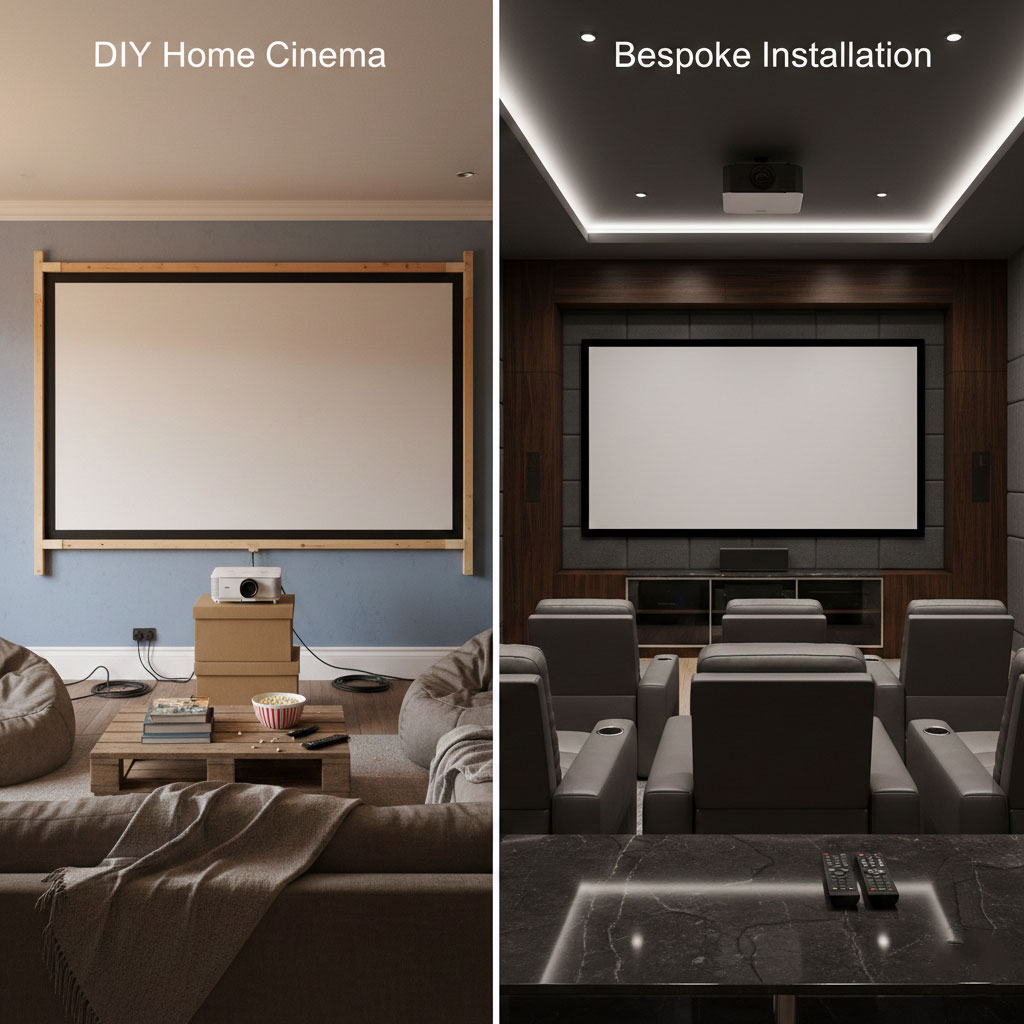
Building a home cinema yourself or commissioning professional installation represents one of the biggest decisions you’ll make during the planning process. Both approaches can deliver excellent results, but they suit different people, budgets, and project complexities in ways that significantly affect your final experience and satisfaction with the completed cinema.
Equipment Selection and Sourcing Differences
How you acquire equipment fundamentally differs between approaches, affecting both cost and choice. DIY builders enjoy complete freedom but face overwhelming options, whilst professional installers limit choices to equipment they know and trust.
- DIY projects let you shop sales, compare retailers, and buy equipment over time as budget allows
- Online retailers offer competitive pricing but provide minimal guidance on system matching
- Professional installers often access trade pricing unavailable to consumers that offsets labour costs
- Bespoke projects typically include equipment as part of overall package pricing
- Warranty and support varies dramatically between retail purchases and professional installation relationships
Professional installers limit choices to equipment they know, which might feel restrictive but eliminates analysis paralysis. This focused approach reduces compatibility risks that DIY builders often discover only after purchasing incompatible components.
Installation Complexity and Technical Challenges
Physical installation difficulty varies enormously depending on project scope and ambition. Simple setups suit confident DIY enthusiasts, but ambitious projects quickly exceed amateur capabilities.
- Basic equipment connection and setup suits anyone comfortable following instructions and connecting cables
- In-wall or in-ceiling speaker installation requires significant carpentry skills and proper tools
- Cable management through walls and ceilings often needs building regulation compliance
- Projector mounting and screen installation demands precise measurements and secure fixing to ceiling joists
- Acoustic treatment and room modification exceed most amateur capabilities without specialist knowledge
Simple cinema setups using furniture-positioned equipment present minimal installation challenges for capable individuals. However, projects requiring structural modifications, hidden wiring, and integrated control systems quickly become complex enough to justify professional expertise.
System Calibration and Optimisation
Getting equipment working differs markedly from optimising its performance to achieve its full potential. Most DIY installations work adequately after basic setup but leave significant performance untapped.
- AV receiver setup wizards guide basic configuration but rarely achieve optimal results
- Proper speaker calibration requires measurement equipment and acoustic knowledge beyond setup wizards
- Display calibration affects picture quality dramatically but requires expertise and specialist tools
- Room acoustic treatment involves understanding reflection patterns and frequency response characteristics
- System integration and automation require programming skills for sophisticated control setups
Professional calibration using measurement equipment and expertise typically improves picture and sound quality substantially. This optimisation represents hidden value in bespoke installations that DIY builders often don’t realise they’re missing.
Cost Comparison and Budget Considerations
Money remains a primary factor in choosing your approach to home cinema installation. Understanding true costs including time, mistakes, and long-term support helps make realistic comparisons.
- DIY installations cost equipment price plus any tools and materials needed for mounting and wiring
- Professional installation adds 20-50% to equipment costs depending on project complexity
- Hidden costs in DIY projects include mistakes, wrong purchases requiring returns, and time-consuming rework
- Bespoke installations include labour, expertise, calibration, and ongoing support in pricing
- Time investment in DIY projects has real value even if no money changes hands directly
A £5,000 equipment package might cost £6,000-7,500 installed professionally for straightforward setup. DIY saves this premium but requires your time, risks mistakes, and provides no recourse if results disappoint.
Long-Term Support and Future Flexibility
How your system performs over years matters as much as initial installation quality. Support availability significantly affects satisfaction when problems inevitably arise over time.
- DIY builders become their own support, troubleshooting issues independently using online resources
- Online communities provide excellent DIY support but require time investment and technical literacy
- Professional installers offer ongoing support relationships and system maintenance contracts
- Bespoke systems often integrate better, simplifying future upgrades or equipment changes
- Warranty coverage differs substantially as installers typically manage claims whilst DIY owners handle everything
When equipment fails or performance degrades, DIY builders must diagnose and resolve issues themselves. Professional installations include support relationships where one phone call brings expert assistance, often resolving issues remotely.
Choosing Your Path to Cinema Success
Neither approach is universally superior as the right choice depends entirely on your specific circumstances. Your decision should reflect an honest assessment of your capabilities, available time, and desired involvement level in the project.
- DIY suits people who enjoy technology, have time available, and accept responsibility for problem-solving
- Professional installation serves those wanting assured results and lacking technical confidence
- Consider hybrid approaches with professional design consultation but DIY installation
- Be honest about your capabilities as underestimating complexity leads to abandoned projects
- Your cinema should bring enjoyment, not stress, so choose the approach that makes that most likely
Many installers offer design-only services providing equipment recommendations and installation guidance whilst leaving work to you. This hybrid approach captures professional expertise benefits whilst retaining DIY cost savings and personal involvement.