
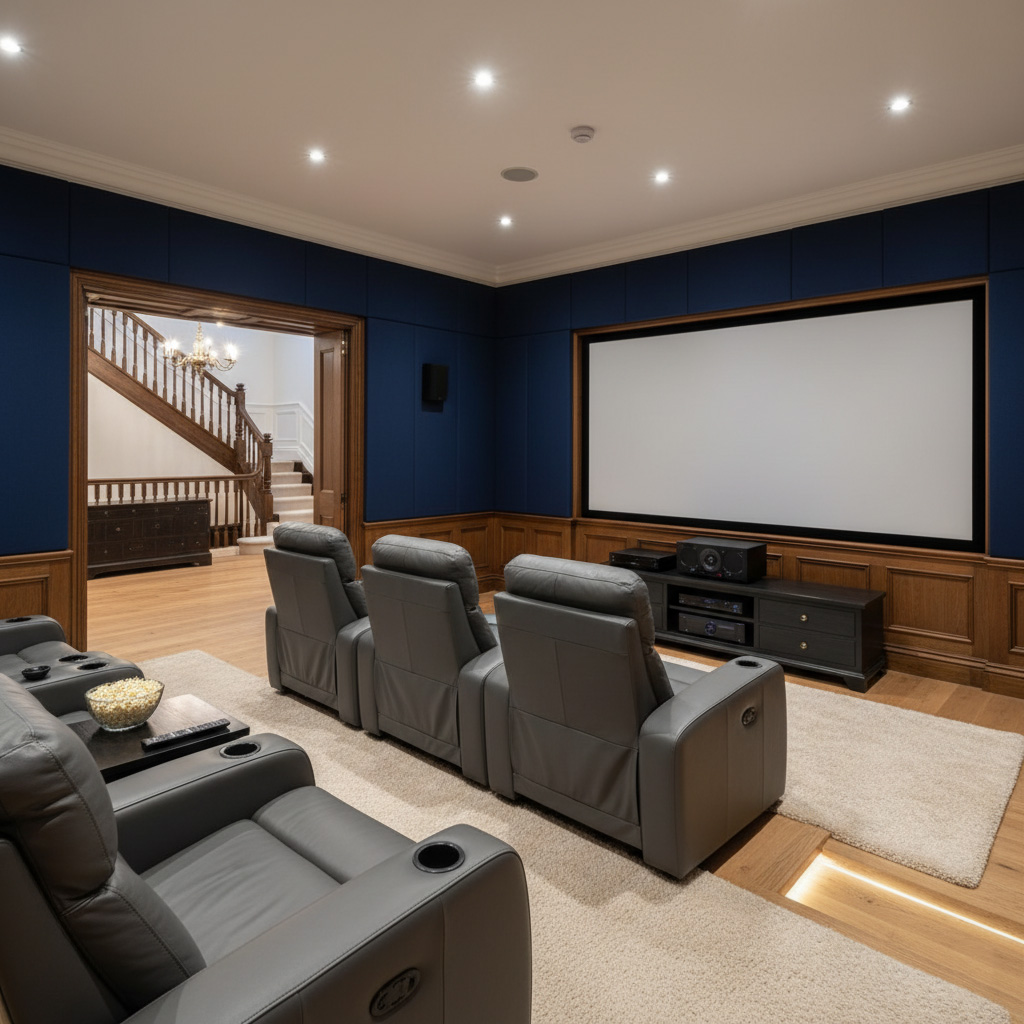
In the design of a luxury home cinema, the technical specifications of your 4K projector or Dolby Atmos sound system often take centre stage. However, even the most breathtaking visuals can be undermined by seating that leaves you feeling stiff, overheated, or distracted mid-movie.
The choice of upholstery material is not merely an aesthetic decision; it is a fundamental component of the room’s ergonomics and acoustic performance. In the UK, where room temperatures can fluctuate, and comfort is king during a winter-night boxset binge, selecting a material that balances breathability, texture, and durability is essential.
Whether you are aiming for the classic opulence of a West End theatre or a sleek, modern media room, the right fabric or leather will define your viewing experience for years to come.
The Acoustic and Tactile Benefits of Performance Velvet
Velvet has long been the gold standard for commercial cinemas, and for good reason. Modern performance velvets offer a plush, “cossetting” feel that instantly signals luxury while providing significant functional advantages for a dedicated screening room.
- Sound Absorption: Unlike hard surfaces, velvet’s dense pile helps to absorb high-frequency sound reflections, reducing echo and improving the clarity of your audio.
- Light Management: Matte velvet finishes absorb light rather than reflecting it, ensuring that “screen glow” doesn’t bounce off your chair and distract your peripheral vision.
- Warmth and Cosiness: In the UK climate, velvet provides immediate warmth, making it the perfect material for settling in during colder months.
- Durability: High-quality synthetic blends are surprisingly hard-wearing and can withstand the “rub count” required for heavy use without losing their sheen.
Choosing velvet creates a cocoon-like environment that enhances both the sonic and visual immersion of your favourite films.
The Sophistication of Top-Grain Leather
For many, a cinema room isn’t complete without the buttery softness and rich aroma of genuine leather. As a natural material, it offers a level of prestige and longevity that synthetic alternatives struggle to match.
- Natural Breathability: High-grade leathers like top-grain or aniline are porous, allowing them to adjust to your body temperature and reducing that “sticky” feeling often associated with cheaper plastics.
- Ergonomic Moulding: Over time, genuine leather “breaks in” and subtly moulds to the shape of the user, creating a bespoke comfort level that improves with age.
- Allergen Resistance: Leather does not trap dust, pet hair, or dander, making it the superior choice for viewers who suffer from asthma or hay fever.
- Easy Maintenance: Spilled drinks or popcorn crumbs can be easily wiped away with a damp cloth, which is vital for maintaining a pristine environment.
Leather is an investment in durability and character, developing a beautiful patina that tells the story of many years of movie nights.
Chenille: The Family-Friendly Comfort King
If your cinema room is a multi-purpose space used by children and pets, chenille offers a “forgiving” texture that prioritises a welcoming, homely atmosphere over formal aesthetics.
- Unique Texture: Chenille is made from “fuzzy” yarns that create a soft, caterpillar-like feel, providing a highly tactile and comforting surface.
- Masking Wear: The multi-tonal nature of many chenille weaves is excellent at hiding minor marks, shadows, and the general wear and tear of family life.
- Consistent Temperature: Unlike leather, which can feel cold to the touch on a winter morning, chenille remains neutral and soft regardless of the room’s heating.
- Robust Construction: Its tight-knit weave makes it resistant to pilling and snagging, ensuring it stays looking “on-trend” even after repeated use.
Chenille is the ideal “bridge” material for those who want the softness of fabric with the resilience needed for a busy household.
The Practicality of Faux Leather (Vegan Leather)
Advancements in textile technology have led to the rise of premium faux leathers—often referred to as vegan leather—which offer the look of hide with enhanced technical properties.
- Stain Resistance: Most faux leathers are treated with a protective layer that is almost entirely impervious to liquid, making them virtually “kid-proof.”
- Consistent Finish: Unlike natural hide, which has “character marks” and grain variations, faux leather provides a perfectly uniform appearance for a minimalist, modern aesthetic.
- Cost-Effectiveness: You can often achieve a luxury “leather look” for a fraction of the price, allowing more budget to be allocated to your audio-visual equipment.
- Animal-Friendly: For many UK homeowners in 2026, the ethical credentials of synthetic materials are a primary factor in their interior design choices.
Faux leather is a high-performance, practical solution for those who want a sleek look without the intensive maintenance required by natural materials.
Microfibre and Suede Alternatives
Microfibre is a staple in high-end media room seating due to its incredible softness and the way it mimics the feel of expensive suede without the fragility.
- Ultra-Fine Fibres: The weave is so tight that it feels incredibly smooth to the touch, providing a “sinking-in” comfort that is ideal for long-form content.
- Moisture Wicking: Quality microfibres are designed to be breathable, helping to regulate your temperature during a three-hour blockbuster marathon.
- Grip and Support: The slightly “grippy” texture of microfibre prevents you from sliding down in your seat when in a reclined position, maintaining better spinal support.
- Modern Aesthetic: It is available in a vast array of contemporary shades, from deep charcoals to midnight blues, that fit perfectly with current UK interior trends.
Microfibre offers a contemporary, high-comfort finish that works exceptionally well in modern, tiered-seating configurations.
Elevate Your Home Cinema Experience
Selecting the right material for your cinema seating is the final piece of the puzzle in creating a world-class home entertainment space. While the visual allure of a material is important, you must also consider how it will interact with your room’s acoustics, lighting, and your family’s lifestyle. Whether you opt for the theatrical depth of velvet or the timeless resilience of leather, the goal is to choose a material that allows you to forget the chair and disappear into the story. In 2026, the best seating materials are those that combine traditional luxury with modern performance technology, ensuring that your tenth year of movie marathons feels just as comfortable as the first.