
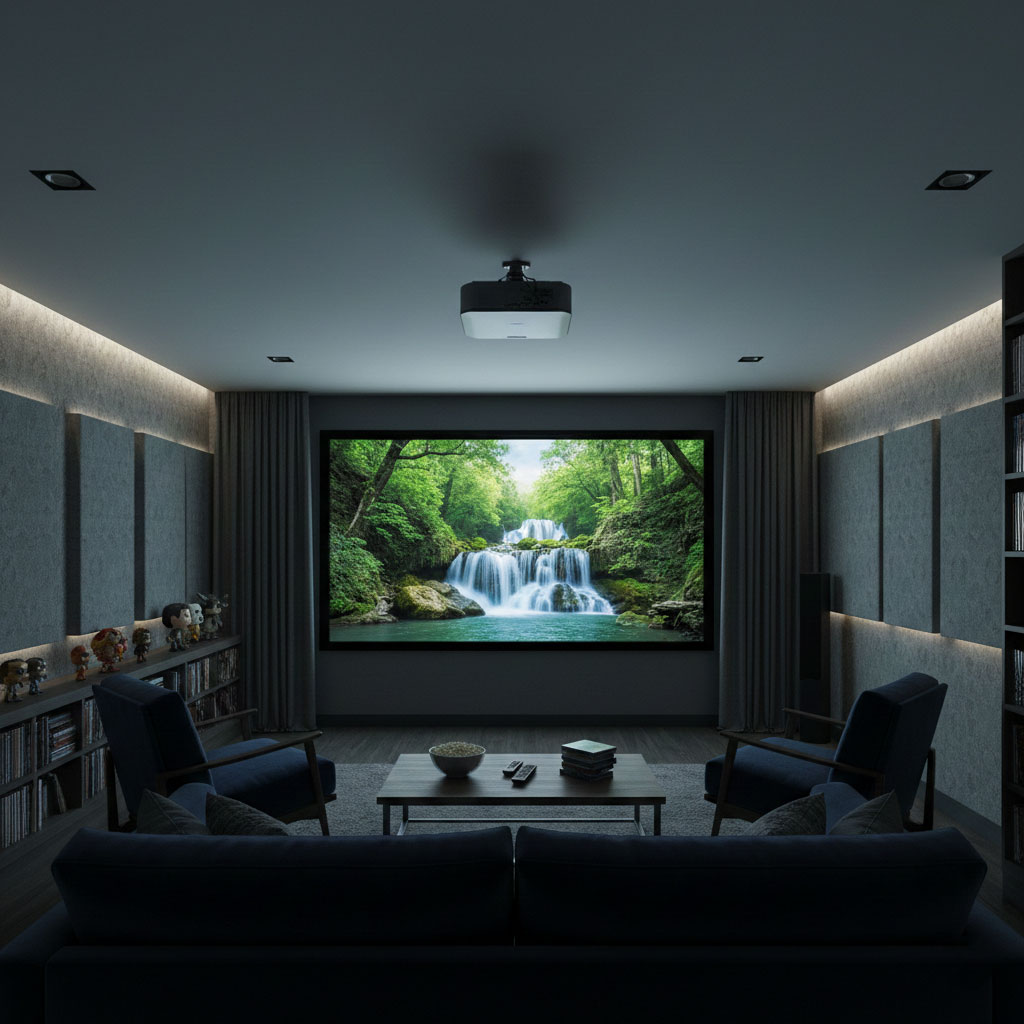
Creating a home cinema has become increasingly popular across the UK, with more households investing in projectors to enjoy a true cinematic experience. Whether you’re transforming a spare room, loft, or living space, choosing the right projector is one of the most important decisions you’ll make.
With both 4K and 8K projectors now available, many homeowners wonder which one offers the best balance of quality, performance, and long-term value.
Understanding the differences between 4K and 8K projectors is essential before committing to such a significant purchase. Since projectors vary in cost, clarity, and compatibility, selecting the right model ensures you achieve the cinematic atmosphere you want without overspending or compromising picture quality.
Understanding the Difference Between 4K and 8K Resolution
Before deciding, it’s important to understand what separates 4K and 8K projectors.
• 4K resolution offers around 8 million pixels, providing excellent clarity for films, TV, and gaming
• 8K resolution delivers over 33 million pixels, resulting in ultra-sharp detail and exceptional image realism
• True 8K content is limited, meaning most viewing is still upscaled
While 8K provides superior image potential, the availability of compatible content remains a deciding factor for many UK buyers.
Practical Considerations for 4K Projectors
4K projectors are the most popular choice for UK home cinemas due to their balance of quality, performance, and affordability.
• They deliver stunning picture clarity that suits most room sizes
• Wide compatibility with streaming services, gaming consoles, and Blu-ray players
• More budget-friendly while still offering a premium cinema-like experience
For most households, 4K projectors offer everything needed for a high-quality visual setup without the premium cost associated with newer technology.
When Investing in an 8K Projector Makes Sense
8K projectors represent the cutting edge of home cinema technology, but they aren’t essential for every space.
• Ideal for very large projection screens where higher resolution is more noticeable
• Future-proof investment for homeowners who want the latest technology
• Best suited for dedicated cinema rooms with controlled lighting and acoustics
Although 8K offers exceptional clarity, the increased cost and limited content availability mean it is more suitable for serious home cinema enthusiasts.
Other Key Factors That Influence Your Decision
Resolution is only one aspect of choosing a projector; several other features affect performance and viewing experience.
• Brightness levels (measured in lumens) determine visibility in rooms with ambient light
• Contrast ratio affects image depth and overall realism
• Your room size, wall colour, and screen type influence picture quality
Considering these factors alongside resolution ensures you select a projector that performs well in your specific home cinema environment.
Budget, Value, and Long-Term Expectations
Price plays a significant role when comparing 4K and 8K projectors, especially for UK households focused on long-term value.
• 4K projectors offer excellent quality at more affordable prices
• 8K projectors carry a premium cost due to advanced technology
• Content availability may impact how useful 8K resolution is in the near future
Understanding your long-term expectations helps you determine whether future-proofing is worth the additional investment.
Choosing the Right Projector for Your Home Cinema
Deciding between a 4K and 8K projector ultimately depends on your room size, viewing preferences, budget, and expectations for future content. For most UK homes, 4K projectors provide outstanding quality, compatibility, and value, making them the more practical choice.
However, if you want the highest possible resolution and are building a dedicated cinema room, an 8K projector may offer a premium, future-ready viewing experience. Selecting the right projector ensures your home cinema delivers exceptional entertainment for years to come.