
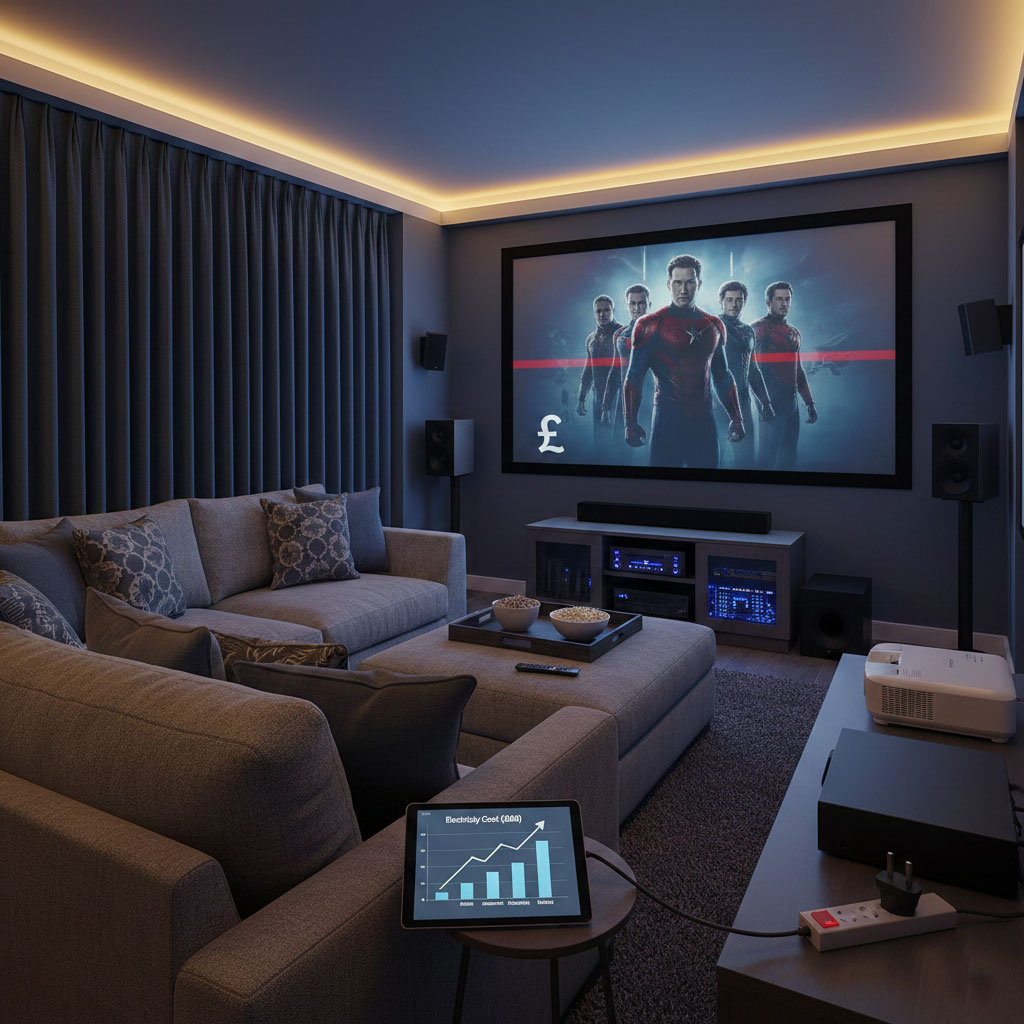
Running a home cinema system adds to your household electricity bills, but many people overestimate the actual costs involved. With UK energy prices fluctuating significantly, understanding your system’s consumption helps you budget accurately and identify opportunities for savings without sacrificing the viewing experience you’ve invested in creating.
Daily Electricity Consumption Breakdown
Understanding what each component uses helps you calculate realistic running costs for your specific setup. Modern equipment has become considerably more efficient, though projectors, amplifiers, and multiple speakers still draw meaningful power during operation.
- Modern AV receivers typically consume 200-400 watts during operation, around 10-20 watts on standby
- LED televisions use 50-200 watts depending on screen size and brightness settings chosen
- Projector lamps draw 150-400 watts, with laser projectors often using less power overall
- Powered subwoofers add 50-150 watts during active use depending on output levels
- Streaming devices and media players contribute 5-25 watts each to total system consumption
At current UK electricity rates averaging £0.24 per kWh, a typical system using 500 watts costs approximately £0.12 per hour of operation. A three-hour film session therefore costs roughly 36p to run, making regular cinema use surprisingly affordable.
Standby Power and Hidden Energy Drain
Standby consumption often surprises people when calculating annual costs, as this hidden drain operates continuously. Many people leave their entire system in standby permanently, allowing convenient remote operation but incurring ongoing costs.
- AV equipment left in standby mode continuously draws power even when not actively used
- A receiver using 15 watts on standby costs roughly £31 annually in wasted electricity
- Multiple devices on standby can collectively consume 50-100 watts around the clock
- Smart plugs or switched extension leads eliminate standby drain completely when equipment isn’t needed
- Network-connected equipment often uses more standby power for instant-on features and updates
Switching equipment off completely at the wall when not in use for extended periods cuts standby costs entirely. However, you sacrifice the convenience of instant access and remote power-on functionality.
Projector Running Costs vs Television Screens
Projectors and televisions have distinctly different running costs that extend beyond simple electricity consumption. The ongoing expense of lamp replacements for traditional projectors significantly affects total cost of ownership.
- Traditional lamp-based projectors consume more power and require £80-150 lamp replacements every 2,000-5,000 hours
- Laser projectors eliminate lamp replacement costs whilst using similar or less electricity than lamp models
- Large OLED televisions use 150-300 watts depending on content brightness and HDR settings
- LED televisions prove most efficient, typically using 30-50% less than equivalent OLED screens
- Screen size dramatically affects television consumption more than projector usage for equivalent image sizes
A lamp-based projector used 10 hours weekly costs approximately £62 annually in electricity, plus £30-50 yearly averaged lamp replacement costs. A 65-inch LED television running the same duration costs around £37 annually with no lamp replacements needed.
Practical Ways to Reduce Running Costs
Simple changes significantly lower your system’s energy consumption without noticeably affecting performance. Most modern equipment includes power-saving features that many owners never enable or explore properly.
- Enable eco modes on projectors and receivers, typically saving 20-30% power without obvious quality loss
- Reduce television or projector brightness as higher settings consume substantially more electricity unnecessarily
- Use timers or smart plugs to completely power down equipment during typical non-use periods
- Choose energy-efficient equipment when upgrading by looking for Energy Star ratings
- Ensure proper ventilation to prevent cooling fans running constantly at high speed
Modern AV receivers include automatic standby features that power down after inactivity periods you can configure. Enabling these functions ensures you’re not accidentally leaving equipment running overnight or during holidays.
Long-Term Cost Considerations and Equipment Lifespan
Running costs extend beyond immediate electricity consumption to include maintenance and equipment longevity. When calculating true ownership costs, consider both purchase price and ongoing expenses over the equipment’s useful life.
- Quality AV receivers typically last 7-10 years with proper care and adequate ventilation
- Projector lamps require periodic replacement, factor this into total ownership costs
- LED and OLED televisions have 50,000+ hour lifespans before noticeable brightness degradation
- Proper cooling and ventilation significantly affect equipment longevity and reliability
- Higher-efficiency equipment often costs more initially but saves money over years of use
A slightly more expensive energy-efficient receiver might cost £100 more initially but save £15-20 annually in electricity. This recovers the premium within five years whilst likely outlasting cheaper alternatives.
What Your Cinema Really Costs to Enjoy
Running a home cinema proves surprisingly affordable when calculated honestly rather than estimated pessimistically. A typical system used regularly costs £80-120 annually in electricity, less than many households spend monthly on streaming subscriptions.
- Even with projector lamp replacements factored in, annual running costs rarely exceed £150-200
- A family of four visiting the cinema monthly spends £400-600 yearly on tickets alone
- Your home cinema pays for its running costs many times over whilst offering superior convenience
- Simple efficiency measures provide adequate savings without constantly monitoring power consumption
- The entertainment value and convenience vastly outweighs the modest energy costs involved
Focus on enjoying your system rather than obsessing over electricity costs that amount to pence per viewing session. The modest running expenses represent excellent value for the entertainment and family time your cinema enables.