
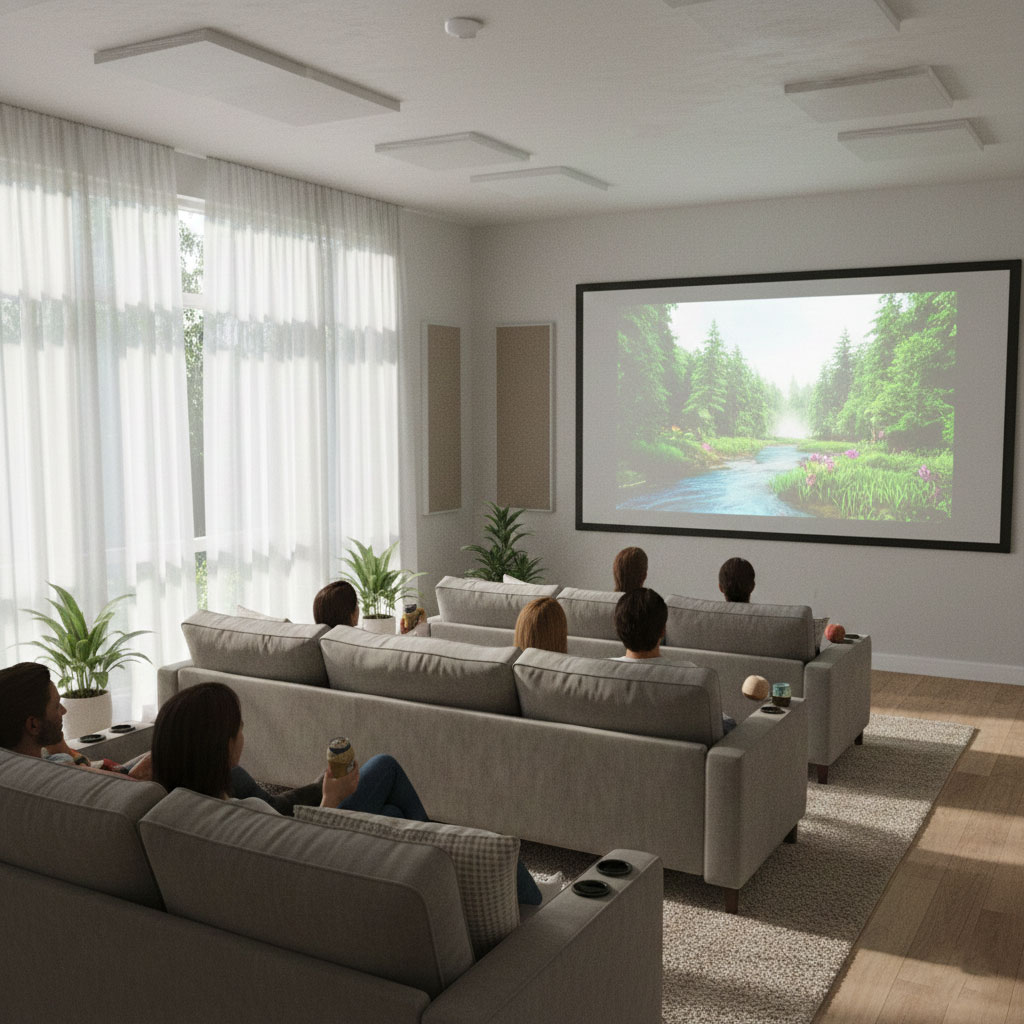
Complete blackout conditions aren’t essential for enjoying quality home cinema, though they undeniably enhance the experience with certain display technologies. Many people assume home cinemas require windowless rooms or expensive blackout solutions, but modern equipment and thoughtful design allow excellent performance even with ambient light present in practical living spaces.
How Ambient Light Affects Picture Quality
Light fundamentally changes how you perceive images on screens by washing out darker elements and reducing contrast. Understanding these effects helps you make informed decisions about equipment selection and necessary light control measures for your space.
- Ambient light washes out darker picture elements, reducing perceived contrast dramatically
- Black levels appear grey rather than deep when room light reflects off screens
- Colour saturation diminishes as surrounding light increases, making images look washed out
- HDR content loses impact when bright room conditions overwhelm display capabilities
- Your eyes adapt to viewing conditions, making moderate light less noticeable than initially expected
Projectors suffer most from ambient light since they reflect images off screens rather than generating light themselves. Televisions generate their own light and cope better with ambient conditions, though even premium displays lose picture quality when rooms aren’t controlled.
Display Technology and Light Tolerance
Different technologies handle ambient light with varying success, which should inform your equipment choices. If your room has significant natural light, certain display types prove far more practical than others.
- OLED televisions maintain excellent blacks and contrast even in moderate room lighting conditions
- High-brightness LED televisions work well in bright rooms, some exceeding 1,000 nits brightness
- Standard projectors require substantial light control for acceptable picture quality
- Laser televisions and ultra-short-throw projectors handle ambient light better than conventional projectors
- Screen selection dramatically affects projector performance as ALR screens reject ambient light effectively
If you’re unwilling to install blackout blinds, a television proves more practical than a conventional projector. Modern large-screen televisions reaching 75-85 inches deliver impressive cinematic experiences without requiring darkness.
Practical Light Control Solutions
You don’t need a complete blackout to dramatically improve viewing conditions in your cinema space. Simple, affordable solutions provide excellent results without transforming your room into a permanently dark cave.
- Thick lined curtains block 80-90% of daylight at a fraction of blackout blind costs
- Dimmable lighting allows adjustment from social brightness to cinema darkness as needed
- Bias lighting behind televisions reduces eye strain whilst maintaining some ambient illumination
- Strategic lamp positioning avoids direct screen reflections that wash out images
- Dark wall colours absorb rather than reflect stray light, improving perceived contrast
Fitted blackout blinds cost £150-400 per window but provide maximum light control when desired. Less expensive solutions like blackout curtains offer flexibility, pulled closed for serious film watching but opened for casual viewing.
Content Type and Viewing Expectations
Different viewing scenarios have varying light requirements that should influence your approach. Not every viewing session demands the same environmental conditions for satisfying results.
- Serious film watching benefits enormously from darkness regardless of display technology used
- Casual television viewing works perfectly fine in normal room lighting conditions
- Sports and daytime programming rarely requires darkened conditions for enjoyment
- Gaming often happens during daytime, making light tolerance essential for practical use
- HDR content shows greatest improvement when ambient light is controlled properly
Consider how you’ll actually use your space rather than designing for theoretical perfect conditions. If your cinema primarily hosts evening film sessions, investing in good light control makes sense.
Multi-Purpose Room Design Strategies
Most home cinemas serve multiple functions beyond film watching throughout the day. Designing for versatility creates spaces that family members actually want to spend time in regularly.
- Avoid completely dark decoration as mid-tone colours allow flexible use for various activities
- Install lighting on dimmers rather than simple on-off switches for control flexibility
- Choose furniture that works for cinema viewing and normal living equally well
- Window treatments should block light when needed but not permanently darken rooms
- Consider display brightness capabilities during equipment selection based on typical room conditions
Your cinema can transition from bright, welcoming family space during daytime to an atmospheric theatre environment for evening viewing. This versatility requires thoughtful equipment selection and room design rather than rigid pursuit of absolute darkness.
Creating Cinema Magic in Real Living Spaces
Perfect blackout conditions deliver optimal picture quality, but they’re not mandatory for satisfying home cinema experiences. Modern display technology, particularly large televisions and ALR screen systems, performs remarkably well in controlled ambient light that most homes can easily achieve.
- Simple measures like closing curtains and dimming lights provide adequate conditions for immersive viewing
- A cinema room that feels inviting gets used regularly and delivers far more value
- Practical light control combined with appropriate equipment lets you enjoy excellent picture quality
- The best home cinema is one you’ll actually use regularly without complicated preparation
- Cinema magic comes from engaging content and immersive sound as much as perfect darkness
Focus on creating an environment that suits your actual usage patterns rather than pursuing theoretical perfection. Modern technology makes remarkable experiences possible even when some ambient light remains in your viewing space.